The path to parenthood can feel isolating and stressful, leaving you wondering: is there anything else I can do to support my fertility journey? While trying to conceive (TTC), many people in Ajax and the Durham Region look for supportive options that help them feel calmer, more resilient, and more in control.
For a growing number of patients, that supportive tool is fertility acupuncture. Acupuncture is often known for pain relief, but many people also use it to support stress regulation, sleep, and overall wellbeing during preconception planning or alongside fertility care. But how is it thought to work, what does the evidence suggest, and what should you expect in a session?
How Fertility Acupuncture May Support Your Body’s Rhythm
The goal of fertility acupuncture is typically supportive: helping the body move toward a steadier rhythm, especially around stress response, sleep, and circulation. Individual results vary, and acupuncture should be viewed as a complementary tool rather than a guaranteed solution.
1) Stress support and nervous system regulation
Trying to conceive can be emotionally demanding. When stress is chronic, it can affect sleep, mood, and overall hormonal signalling. Many patients report feeling deeply relaxed during acupuncture sessions. Research is still evolving, but acupuncture may help support a calmer nervous system response and improved coping during a high-stress season.
2) Circulation support
Many fertility-focused acupuncture plans also aim to support healthy circulation. Some studies suggest acupuncture may influence circulation-related parameters, which is one reason people feel it supports overall reproductive wellness. Evidence is mixed, and it should not be framed as a guaranteed way to improve uterine lining or fertility outcomes.
3) Whole-person support during Trying to Conceive (TTC)
Even when fertility outcomes are uncertain, the day-to-day experience of TTC is very real. Acupuncture may support quality of life for some people by helping with:
- Tension and stress
- Sleep disruption
- Headaches or Body discomfort
- Digestive symptoms
- Anxiety and burnout
For many patients, that quality-of-life support is meaningful during TTC.
Fertility Acupuncture with IVF or IUI in Durham Region
If you are pursuing IVF or IUI, acupuncture is most often used as a complementary therapy, not a replacement for medical fertility care. The intention is usually to support comfort, relaxation, and coping during a treatment cycle.
Some people book sessions:
- During stimulation to support stress and sleep
- Around key milestones (as permitted by clinic timing and individual preference)
- Between cycles to support recovery and wellbeing
Important: Evidence on acupuncture improving IVF success rates is mixed. It’s best described as a supportive option that may help you feel calmer and more regulated through the process, rather than a treatment that guarantees implantation or pregnancy.
Patients across Ajax, Pickering, Whitby, and Oshawa often choose acupuncture because it can be one part of care they can control, even when much of the fertility journey feels uncertain.
Can Acupuncture Support PCOS, Irregular Cycles, or Male Fertility?
Fertility is not only a “women’s issue,” and many couples benefit from whole-person support for both partners.
PCOS and irregular cycles
For people with PCOS or irregular cycles, acupuncture is sometimes used as part of a broader plan to support:
- Stress regulation and sleep
- Symptom management
- Cycle tracking routines and consistency
- Overall wellness
Some studies suggest acupuncture may support cycle regularity for some individuals, but results vary. It should not be presented as a cure for PCOS or infertility.
Male fertility support
Acupuncture is also used by some men as a supportive approach for:
- Stress reduction
- Sleep and recovery
- Overall wellbeing
There is emerging research on sperm parameters, but findings are mixed. If male factor fertility is a concern, the most helpful path typically includes a medical evaluation, evidence-based lifestyle support, and coordinated care.
Your First Fertility Acupuncture Session in Ajax: What It Feels Like
A first appointment usually begins with a detailed conversation. Your practitioner may ask about:
- Cycle history and symptoms
- Sleep, stress, digestion, energy, and pain
- Current fertility plan (TTC, IUI, IVF, medications)
- Health history and goals
Does acupuncture hurt?
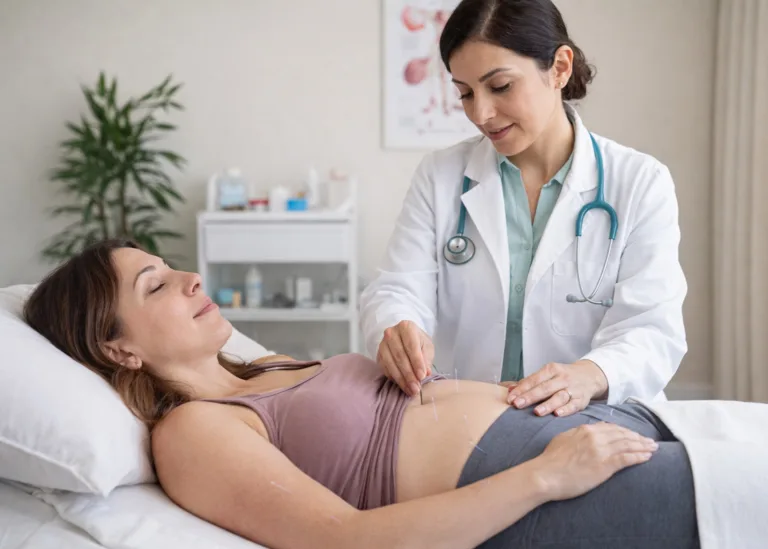
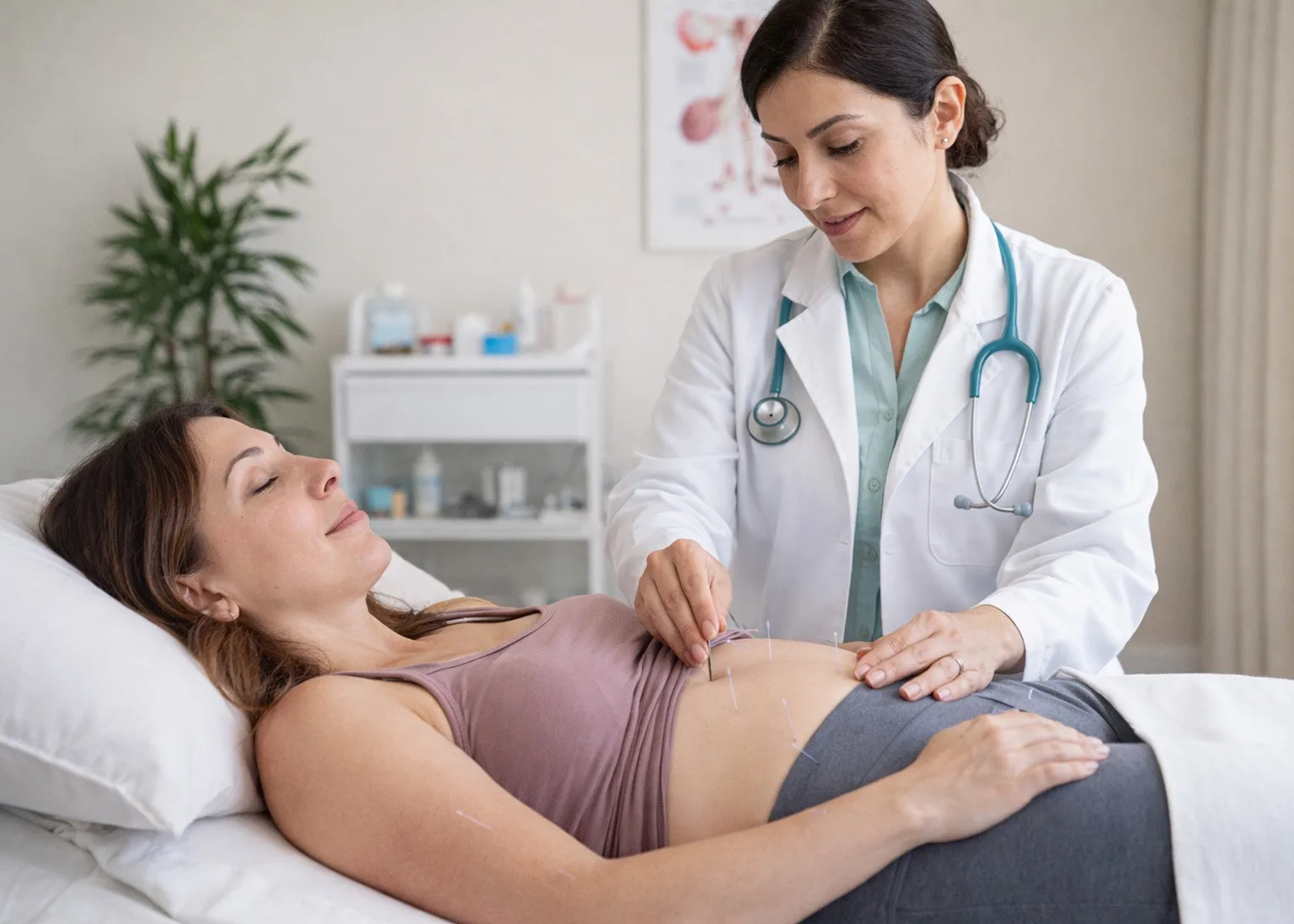
Acupuncture needles are very fine. Most people describe sensations as:
- A light pinch
- A brief warmth or dull ache
- Tingling or heaviness around a point
After needles are placed, you’ll typically rest for 20–30 minutes. Many people feel calm, sleepy, or deeply relaxed.
Side effects and safety
Side effects are usually mild and temporary, such as:
- Brief soreness or tenderness
- Small bruising
- Temporary fatigue
- Occasional light-headedness
Serious complications are rare when treatment is provided by a properly trained, regulated professional using sterile technique.
How to Find a Qualified Fertility Acupuncture Provider in Ontario
In Ontario, the most important first step is confirming that your provider is properly licensed and practicing within scope.
If you’re seeing a Naturopathic Doctor (ND) who offers acupuncture
Some Ontario clinics offer acupuncture as part of naturopathic care. In this case:
- Look for an ND registered with the College of Naturopaths of Ontario (CONO)
- Ask about their experience supporting fertility and hormonal health
- Ask how they coordinate care if you’re working with a fertility clinic
At Aniyah Care in Ajax, Dr. Maryam Jahanshahi, ND is a CONO-registered naturopathic doctor whose clinical focus includes women’s hormonal health, including fertility support and PCOS, and she incorporates acupuncture and other naturopathic therapies into individualized care plans.
If you’re seeing a Registered Acupuncturist (R.Ac.) / R.TCMP
In Ontario, acupuncture may also be provided by a:
- Registered Acupuncturist (R.Ac.), or
- Registered Traditional Chinese Medicine Practitioner (R.TCMP)
If you choose this route, confirm reproductive-health experience and ask how they coordinate with your medical fertility team if you are doing IVF/IUI.
Questions to ask before you book
- How often do you support fertility patients (TTC, PCOS, IVF/IUI)?
- How do you time care around fertility clinic protocols?
- What should I expect over the first 4–6 visits?
- What safety considerations apply if I’m pregnant or using fertility medications?
A qualified provider should welcome these questions and give clear, realistic expectations.
Fertility Acupuncture in Ajax and Durham Region: Your Next Step
Fertility acupuncture isn’t a guarantee, but it can be a supportive option for many people navigating TTC. For patients in Ajax and the Durham Region, it’s commonly used to support:
- Stress regulation and sleep
- Coping during IVF/IUI cycles
- Overall wellness during a demanding season of life
If you’re considering fertility acupuncture, start with a simple step: choose a properly regulated Ontario provider and discuss how acupuncture can fit alongside your existing fertility plan.
Acupuncture is a complementary therapy and not a substitute for medical assessment or fertility treatment. If you’re trying to conceive or undergoing IVF/IUI, coordinate care with your fertility clinic or primary care provider.