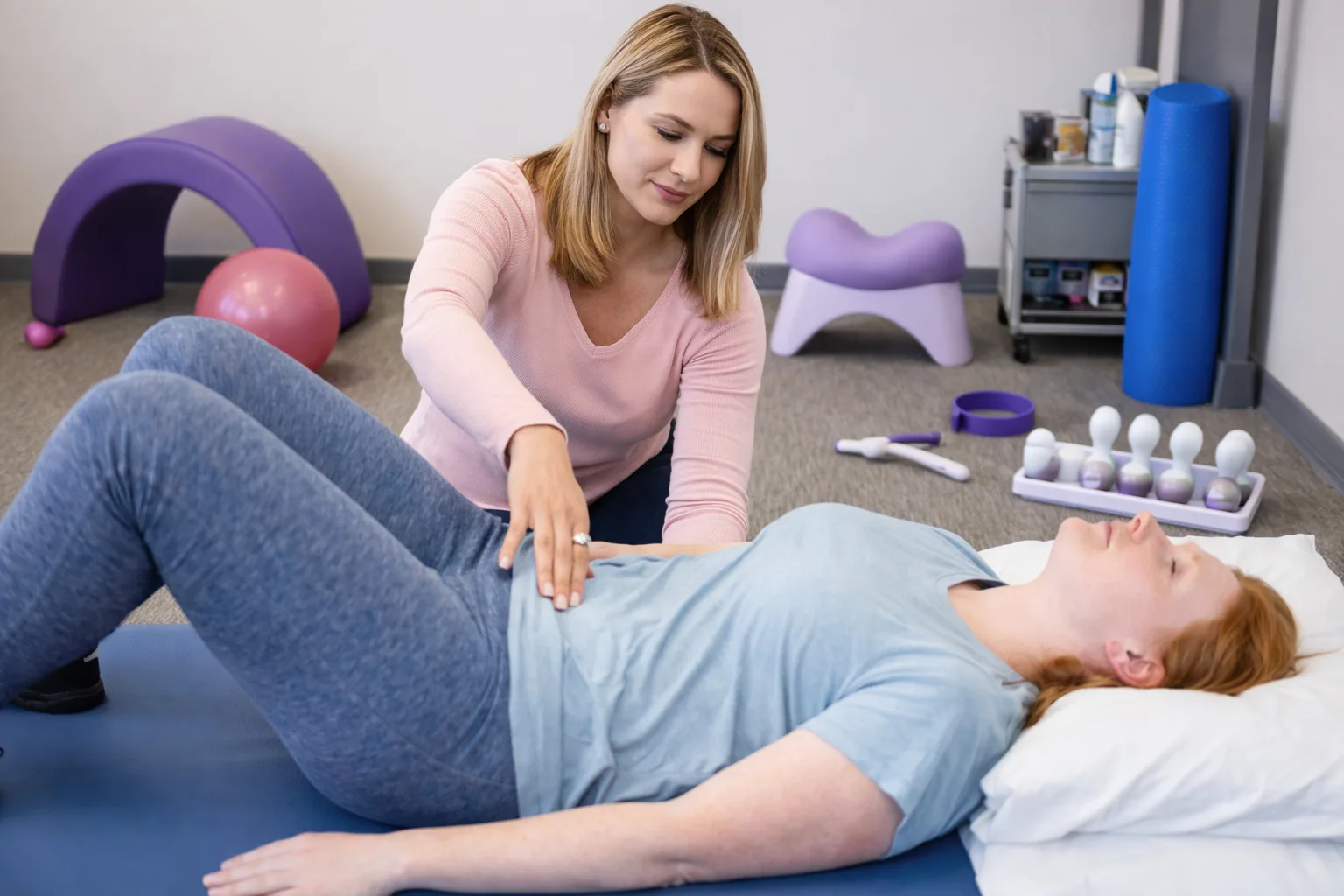
Pelvic floor exercises for bladder leaks, commonly known as Kegels, are one of the most effective non-surgical treatments for urinary incontinence in women. Kegels are the most famous and most misunderstood exercise in women’s health. Done correctly, pelvic floor exercises can significantly improve bladder control. Done incorrectly, they can do nothing or even make symptoms worse. Here is what you need to know.
What Pelvic Floor Exercises Actually Do
Regular pelvic floor exercises can yield significant improvements in bladder control.
Your pelvic floor is a hammock of muscles slung between your pubic bone and tailbone, supporting your bladder, uterus, and bowels. Like any other muscle group, it can be strengthened through targeted exercise. A strong, responsive pelvic floor helps close off the urethra during pressure (preventing stress leaks) and helps suppress unwanted bladder contractions (reducing urge leaks).
How to Find Your Pelvic Floor Muscles
The classic instruction is to imagine stopping the flow of urine midstream. That sensation engages the right muscles. (Do not actually do this regularly while urinating, it is just a way to find the muscles.) Another approach: imagine gently lifting a marble inside your vagina upward and inward.
Engaging in pelvic floor exercises strengthens the muscles that support bladder function.
Why Kegel Exercises Are Important for Bladder Leaks and Urinary Incontinence
Several factors can weaken the pelvic floor muscles, including pregnancy, childbirth, surgery, aging, chronic straining from constipation or frequent coughing, and excess body weight.
Doing Kegel exercises correctly and in a targeted way can be especially beneficial if you experience:
- Urine leakage that occurs with a sudden, strong urge to urinate (urge incontinence), often triggered by everyday situations such as hearing running water, unlocking your front door, exposure to cold weather, sudden movements, or sometimes with no clear trigger at all.
- Urine leakage during activities like sneezing, laughing, coughing, lifting, or exercise (stress incontinence), most commonly seen after vaginal childbirth but also affecting women with aging or after menopause.
- When both types are present, it is called mixed incontinence, which occurs when a person experiences both stress and urge incontinence.
How to Do a Kegel Correctly
- Empty your bladder
- Sit, stand, or lie comfortably
- Tighten your pelvic floor muscles as if lifting upward
- Hold for 3–5 seconds (working up to 10 seconds over time)
- Fully relax for the same amount of time
- Repeat 10–15 times
- Do this 3 times per day
The relaxation phase matters as much as the contraction. A pelvic floor that cannot fully relax is just as dysfunctional as one that cannot contract.
Why Most Women Do Them Wrong
Studies have found that around half of women given verbal Kegel instructions perform them incorrectly. Common mistakes include:
- Bearing down instead of lifting up
- Holding the breath
- Tightening the abs, glutes, or thighs instead of the pelvic floor
- Skipping the relaxation phase
- Doing too many, too fast
Why Some Women Should Not Do Kegels at All
This is the part most articles get wrong. Some women have an overly tight pelvic floor what physical therapists call hypertonic. For these women, Kegels can make symptoms worse. Signs you may have a tight pelvic floor instead of a weak one include pelvic pain, painful sex, difficulty fully emptying your bladder, and constipation. If any of these sound familiar, see a pelvic floor physical therapist before starting a Kegel program.
Why Working With a Specialist Beats Doing It Alone
Understanding the mechanics of pelvic floor exercises can help women avoid common mistakes.
A pelvic floor physical therapist can evaluate exactly what your muscles are doing, give you targeted exercises (which are often very different from generic Kegels), use biofeedback to help you train accurately, and progress your program as you improve. Most women who try Kegels alone for incontinence and “do not see results” actually need this kind of guidance.
How Long It Takes to See Results
If you practice Kegel exercises regularly, you can start to see results within a few weeks to a few months. For example, you may notice less frequent urine leakage. To maintain these benefits, it’s important to make Kegel exercises a lasting part of your daily routine.
What You Need to Know Before You Start Pelvic Floor Exercises
- For women with a tight pelvic floor, it’s crucial to consult a specialist before starting pelvic floor exercises.
- A pelvic floor physical therapist can provide guidance on effective pelvic floor exercises.
- Pelvic floor exercises are often recommended by health professionals to strengthen the pelvic muscles.